By Chef Paprika
If you have a kaiseki dinner booked in Japan, you might be a little nervous. The menu is often written in Japanese, the dishes keep coming one by one, and you are not sure what is next or how you are supposed to eat it.
I understand. I am Chef Paprika. I have worked in Japanese kitchens for 23 years, including a ryotei (a traditional high-end Japanese restaurant) and a Michelin-starred restaurant, and I hold a license to prepare fugu (pufferfish). Kaiseki is something I have cooked from the inside, course by course. In this guide I want to give you the words on the menu, the way the meal usually flows, and a few small manners, so you can relax and simply enjoy it.
One honest note before we start: there is no single “correct” order that every restaurant follows. Each kitchen builds its own menu. So read this as a map, not a rulebook.
First, there are two kinds of “kaiseki”
Many guides skip this part, and it is why they often seem to disagree with each other.
In Japanese, two different words are both read kaiseki:
| Word | Kanji | What it is |
|---|---|---|
| Kaiseki ryori | 懐石料理 | Food served at a tea gathering (chaji) in the tea ceremony. Built on ichiju sansai — one soup and three dishes. Simple, quiet, and deep, letting each ingredient speak for itself. |
| Cha-kaiseki | 茶懐石 | Another name for the same tea-ceremony meal. It is served so that guests can enjoy the thick tea (koicha) that follows. |
| Kaiseki ryori | 会席料理 | A course of Japanese food made to be enjoyed with sake. Seasonal ingredients, served one dish at a time. |
The tea version, 懐石, takes its name from a story about Zen monks: they would put a warmed stone (seki, 石) inside the fold of their robe (kai, 懐) to hold off hunger. That tells you the spirit of it — modest food, just enough.
The restaurant version, 会席, is what most travelers actually eat at a ryotei, a ryokan (traditional inn), or a kappo restaurant. It is a meal for drinking and enjoying the season. To make things a little more confusing, many restaurants write 懐石 on the menu even when the meal they serve is 会席. So if your menu says 懐石, you are most likely still having the restaurant-style course I describe below.
The two share many of the same words — hassun, mukozuke, wanmono — which is exactly why the order gets confusing online. A writer describing a tea meal and a writer describing a ryokan dinner will both be “right,” but they are describing different things.
The words on a kaiseki menu
Here are the words you are most likely to see. I have grouped them roughly in the order they tend to appear, but again, the order changes from restaurant to restaurant.
| Romaji | Kanji | What it means |
|---|---|---|
| Sakizuke / Hashizuke / Kozuke | 先付 / 箸付 / 小付 | The first small dish, a bite to go with your first sip of sake. The name comes from being the first thing you put your chopsticks to. It is small and seasonal. |
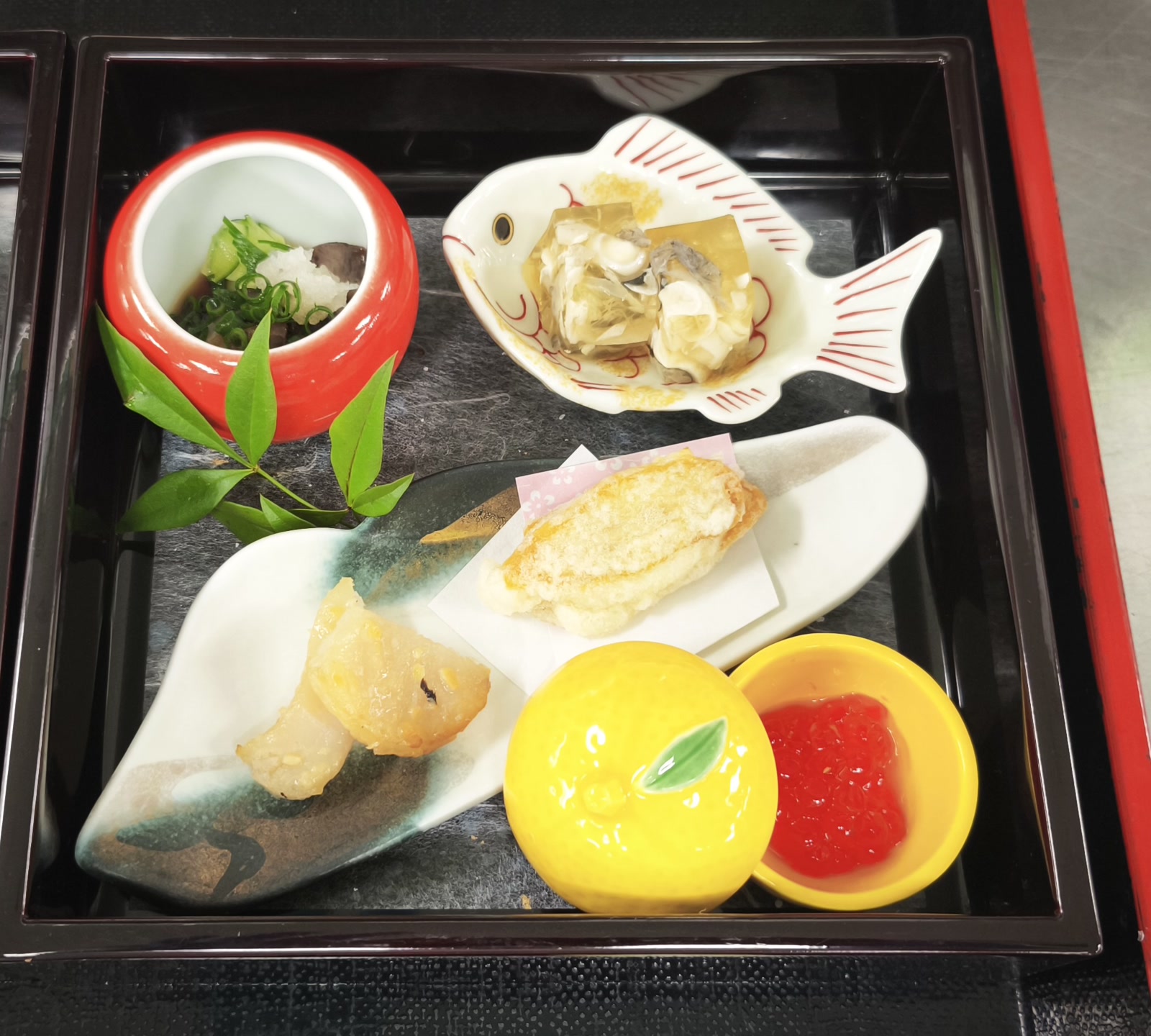
| Hassun | 八寸 | A beautiful plate of small bites from the sea and the mountains. Named after the 8-sun (about 24 cm) square wooden tray it was first served on. |
| Kuchigawari | 口替わり | A menu name meaning almost the same as hassun: three to five one-bite seasonal dishes to go with sake. |
| Kumizakana | 組肴 | Also close to hassun: several dishes arranged together on one plate. |
| Kuchitori | 口取り | The same idea, but this name is used at formal occasions such as memorial services and weddings, and for boxed or take-home food. |
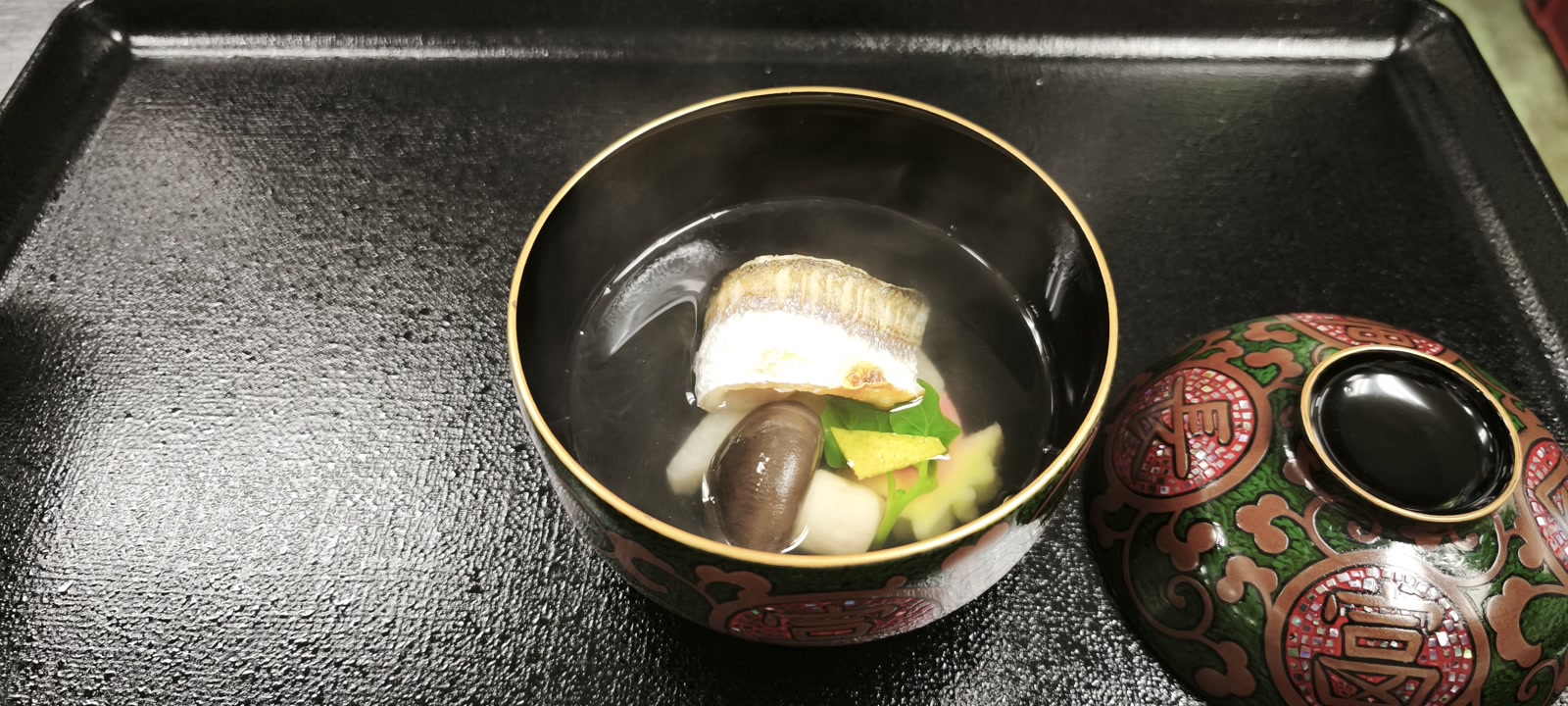
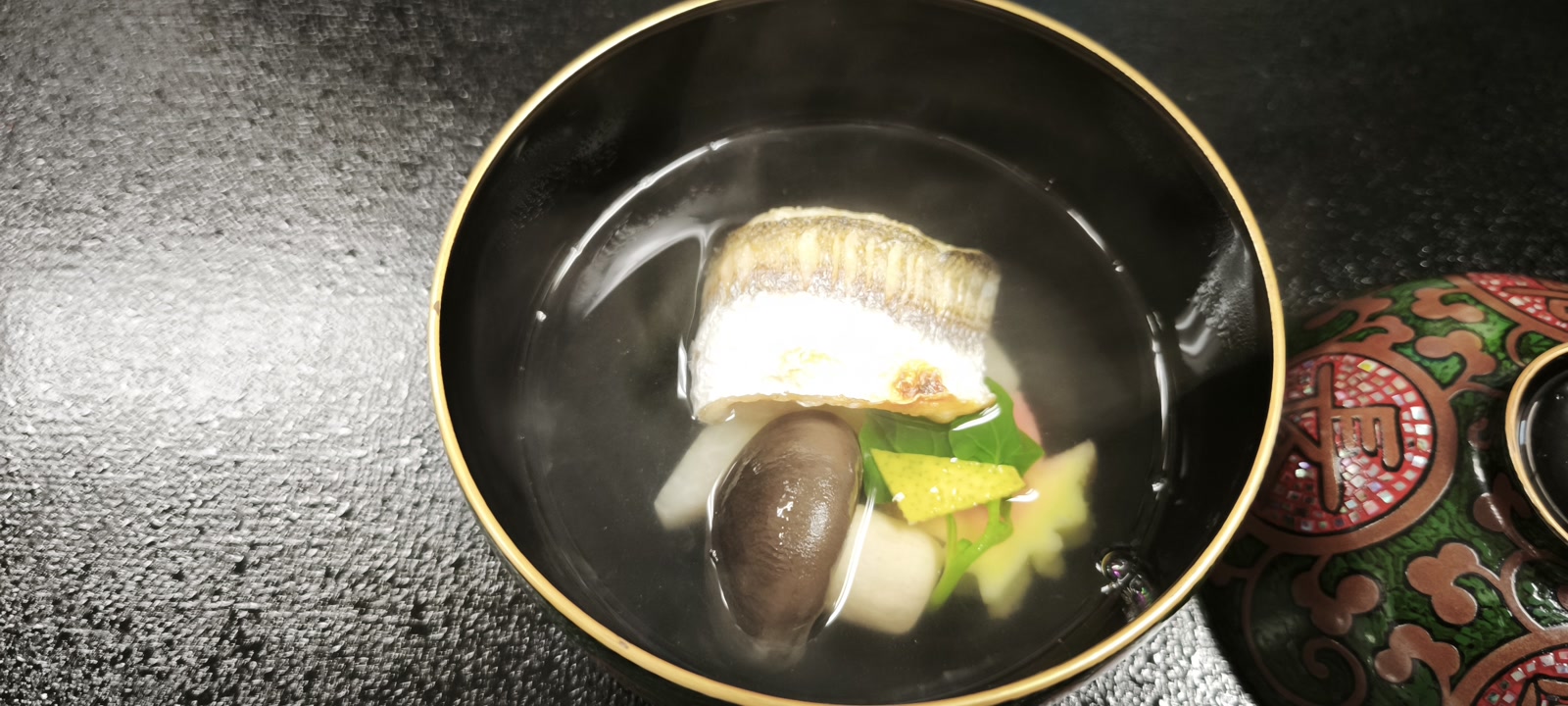
| Wanmono / Nimono-wan | 椀物 / 煮物椀 | The main lidded bowl. The star ingredient sits in fine dashi with seasonal vegetables. |
| Otsukuri | 御造り | Sashimi, in polite form. At kaiseki and kappo restaurants it is usually written this way. |
| Mukozuke | 向付 | In restaurant kaiseki (会席), mukozuke means the same as otsukuri: the sashimi course. In tea kaiseki, it is the dish placed on the far side of the rice and soup. A lidded one is called futamuko (蓋向). |
| Yakimono | 焼物 | A grilled dish of fish, meat, or vegetables. |
| Shiizakana | 強肴 | A dish with a slightly stronger flavor, served to go with your sake. |
| Mushimono | 蒸し物 | A steamed dish, such as chawanmushi (savory egg custard). |
| Takiawase | 炊合 | Several ingredients simmered separately, then arranged together in one bowl. |
| Oshinogi | 御凌ぎ | A small dish of rice or noodles served partway through to “hold off” hunger — sushi, iimushi (steamed sticky rice), or soba. |
| Hashiarai | 箸洗い | A tiny clear soup that rinses your palate and the tips of your chopsticks. |
| Hashiyasume | 箸休め | A small “chopstick rest” dish — vinegared things, greens, or pickles — to refresh your mouth. |
| Shokuji | 食事 | The rice course near the end of the meal: rice and pickles. |
| Tomewan | 止椀 | The miso soup served together with the rice. |
| Ko no mono | 香の物 | Pickles, in polite form. Served at the end with the rice and soup. |
| Mizumono | 水物 | Fruit or sweets to end the meal. |
| Mizugashi | 水菓子 | Fruit served after the meal. |
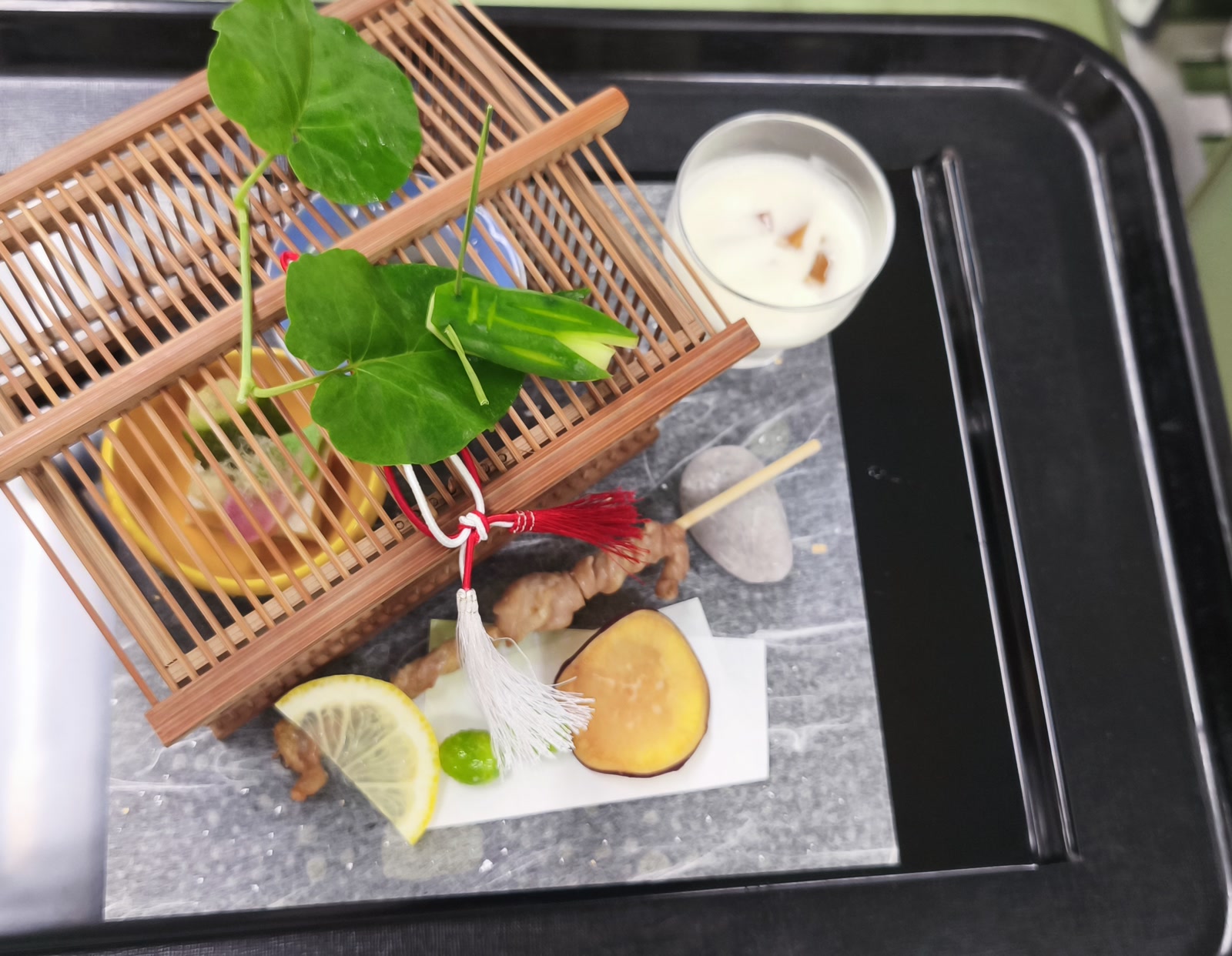
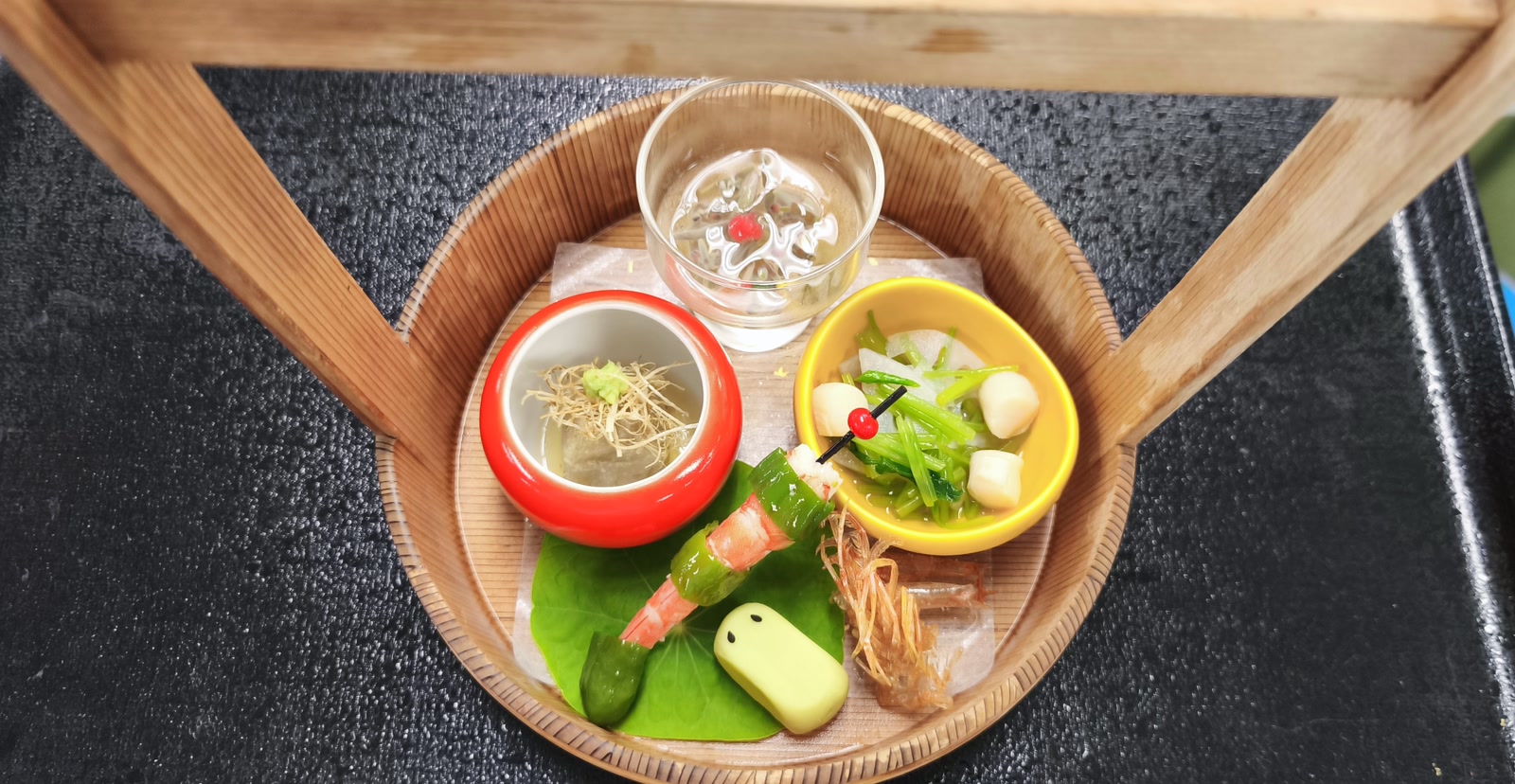
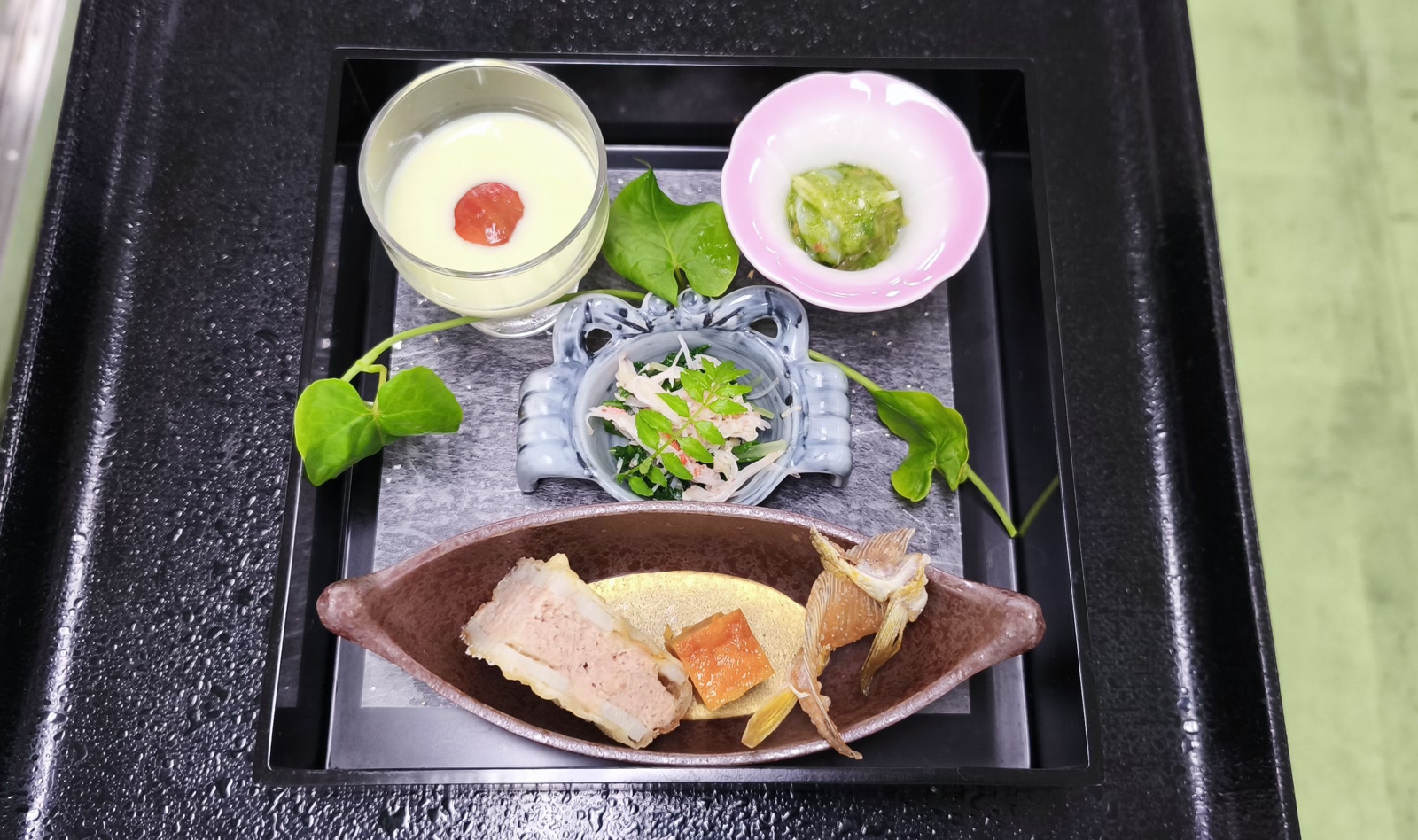
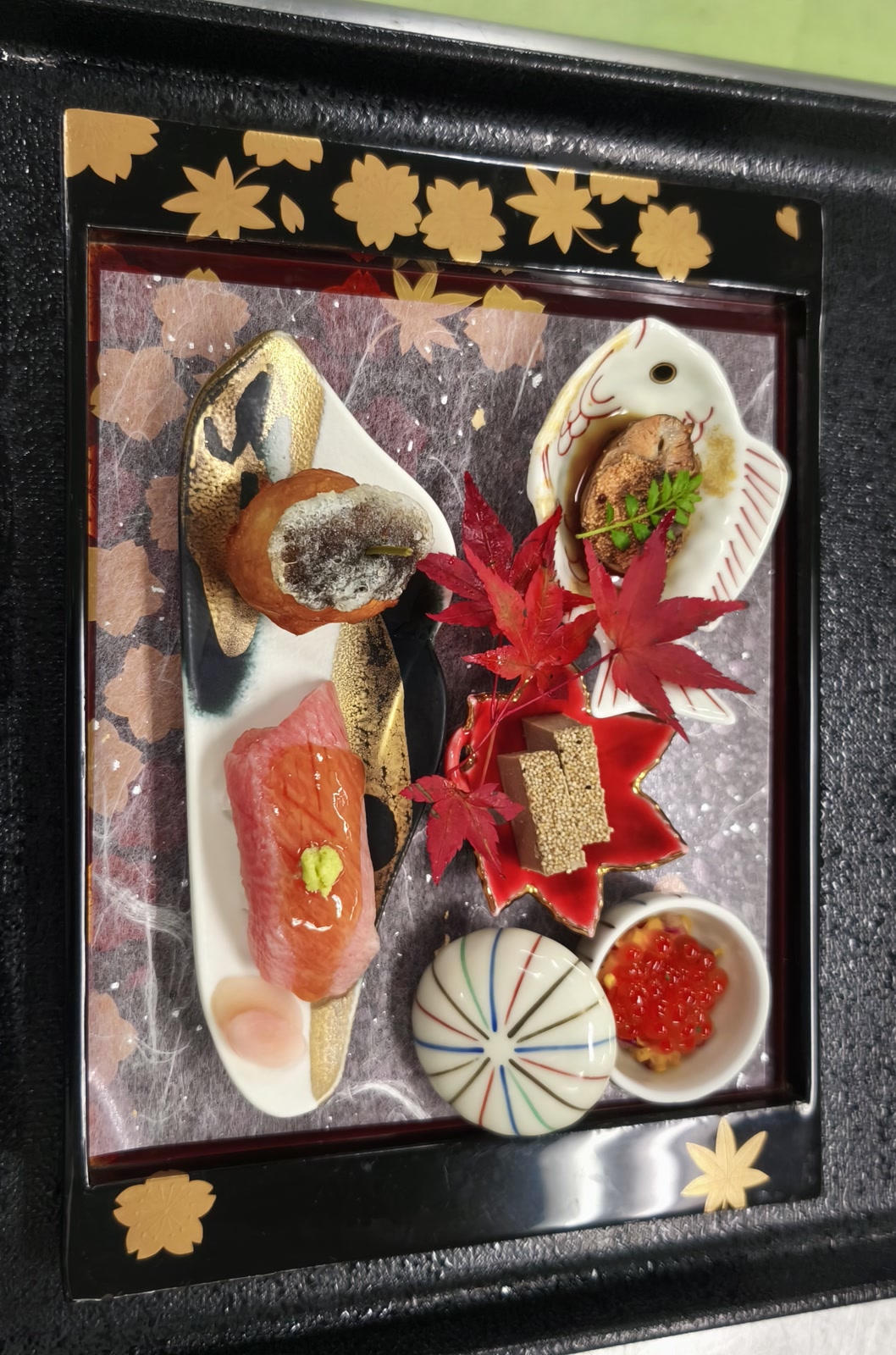
Hassun: the plate where the chef shows the season
If there is one course to slow down for, it is hassun. This is where a cook shows the season most clearly, along with their own skill and personal taste. I look for three things when I build one:
- A sense of the season — what is in the market right now.
- The sea and the mountains together — seafood alongside foods from the land.
- Odd numbers — the one-bite pieces are usually arranged in three, five, or seven.
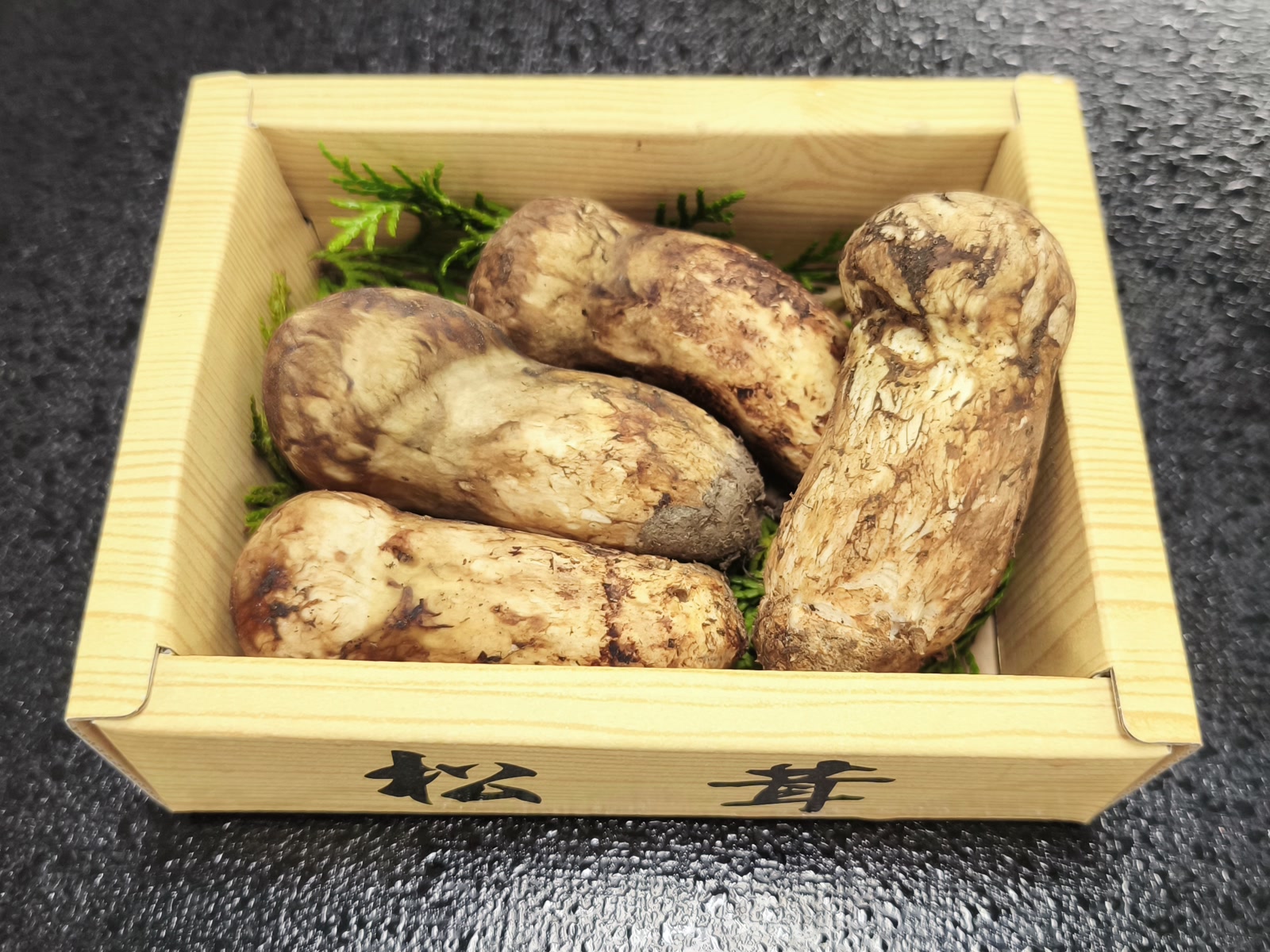
The leaves under the food matter too. We call them kaishiki (掻敷). They protect the dish, but they also tell you the season: cherry leaves in spring, bamboo or lotus leaves in summer, maple in autumn, nandina or pine in winter.
The wanmono: the bowl to pay attention to
The wanmono (also called nimono-wan) is the bowl with a lid, larger than an ordinary soup bowl. It is not “soup” in the usual sense. The star is the ingredient inside, called the wandane (椀種), sitting in good dashi with seasonal vegetables and a small aromatic touch. In Japanese cooking this bowl is thought of as the one that shows the cook’s skill and sense of season.
When you lift the lid, take a moment for the aroma first. That is part of the dish.
Lifting the lid of a wanmono. Steam rises from the clear broth.
Otsukuri: why “tsukuri” and not “sashimi”
You will often see 御造り instead of 刺身 on a kaiseki menu. Tsukuri means more than raw fish: it is fish cut and arranged as a finished plate, with garnishes and condiments. There is also a story that in the Kansai region people avoided the word sashimi because 刺す (sasu) means “to stab,” and so they said tsukuri instead.
Some menus write 向付 (mukozuke) for this course instead. At a restaurant kaiseki dinner, that is the same thing: your sashimi. This is the point where English websites disagree the most, and the reason is the tea version. In tea kaiseki, mukozuke is the dish set on the far side of your rice and soup.
How the courses usually flow
Here is the general shape of a restaurant kaiseki (会席) dinner. Please do not worry if your menu looks different — every restaurant builds its own, and some courses come a little earlier or later.
How a kaiseki dinner usually flows. The order can change from restaurant to restaurant.
- Sakizuke — the first small bite, with your first drink.
- Hassun — the seasonal plate.
- Wanmono — the lidded bowl.
- Otsukuri (mukozuke) — sashimi.
- Yakimono — the grilled dish.
- Takiawase — the simmered dish.
- Shokuji — the meal “closes” with rice, tomewan (miso soup), and ko no mono (pickles).
- Mizumono — fruit or sweets to finish.
Depending on the restaurant, you may also get a mushimono (steamed dish), a shiizakana (a stronger-flavored dish for your sake), an oshinogi (a small rice or noodle dish), or a hashiyasume (a palate refresher) somewhere along the way.
And in tea kaiseki?
Tea kaiseki is built differently. It starts from ichiju sansai — one soup and three dishes. After that, a tiny clear soup called hashiarai is served to cleanse your mouth and chopsticks, and hassun also appears in tea kaiseki. The meal is there to prepare you for the thick tea.
How long does a kaiseki dinner take?
In most cases, about two hours, from the moment you sit down to the moment you leave your seat. Plan your evening with that in mind, and let the dishes come at their own pace.
A few manners that actually help
You do not need to know everything. Here are the few I would really tell a friend about.
- Tell the restaurant about allergies when you book. If there is anything you cannot eat, allergies included, please let the restaurant know when you make the reservation.
- Dress neatly. Please wear something clean and smart. Avoid shorts and sandals.
- Ask before you take photos. A short “May I take a photo?” is all it takes.
- Never pass food from your chopsticks to someone else’s chopsticks. This is called hashiwatashi (箸渡し). It reminds Japanese people of the funeral rite where bones are passed with chopsticks after cremation, so it is one of the chopstick habits to avoid at the table.
- Enjoy the lid. For lidded bowls and lidded dishes like futamuko, the aroma and steam when you open it are part of the experience.
- Look before you eat. The plates, the leaves, and the arrangement are chosen for the season. A moment of looking is a compliment to the kitchen.
- About the chopsticks: at tea kaiseki and some high-end ryotei, you may get rikyu-bashi (利休箸), chopsticks tapered at both ends. They are said to have been designed by the tea master Sen no Rikyu for tea kaiseki, so either end can be used — a small sign of care for the guest.
FAQ
Is kaiseki the same as tea ceremony food? Not exactly. 懐石 (cha-kaiseki) is the meal served at a tea gathering, based on one soup and three dishes. 会席 is a seasonal course meant to be enjoyed with sake. Both are read “kaiseki,” and many restaurants write 懐石 on the menu even when the meal is 会席.
What is hassun? A seasonal plate of small bites from the sea and the mountains, usually in odd numbers. It is named after an 8-sun (about 24 cm) square tray. On some menus it is written kuchigawari or kumizakana, and at formal ceremonies kuchitori.
Why do English websites list the courses in different orders? Partly because tea kaiseki and restaurant kaiseki are mixed together, and partly because every restaurant builds its own menu. The order changes from kitchen to kitchen.
What does “otsukuri” mean on the menu? It is the polite word for sashimi, plated as a finished dish with garnishes. It is the common way to write it at kaiseki and kappo restaurants. At a restaurant kaiseki dinner, mukozuke on the menu means the same course.
Is dessert served? Yes. The meal usually ends with mizumono: fruit or sweets. You may also see the word mizugashi, which originally meant fruit; these days it sometimes also covers sweets like mizu-yokan (soft bean jelly).
How long does a kaiseki dinner take? Usually about two hours, from sitting down to leaving your seat.
Before your dinner
Kaiseki is not a test. It is a meal built around one season, cooked so you can taste each ingredient at its best. If you know a few words on the menu, you will notice so much more.
And one small wish from the kitchen: hospitality is easiest to enjoy when it goes both ways. If you can show a little kindness to the cooks and the people serving you, it makes us very happy.
If you would like to read more from my kitchen, these English guides are a good next step:
- Is Fugu Safe? A Licensed Fugu Chef Explains
- Sitting at a Japanese Counter: What Makes an Itamae Happy (and What Doesn’t)
- Japanese Knife Types and Names, Explained by a Working Itamae
- How to Sharpen a Single-Bevel Japanese Knife, Step by Step
- How to Cut a Tuna Block into Saku (Sashimi Blocks): A Professional Itamae’s Method