If you are planning a trip to Japan, you have probably heard about fugu, the pufferfish that can kill you if it is prepared the wrong way. Maybe it is on your bucket list. Maybe it is the one thing you are nervous about. Either way, I would like to give you a straight answer from the kitchen side of the counter.
I am Chef Paprika, an itamae (a chef of Japanese cuisine). I have worked in kitchens for 23 years, including a ryotei (a traditional high-end Japanese restaurant), a Michelin-starred restaurant, and a members-only club in central Tokyo. I have served as head chef. I also hold a Tokyo fugu license, which I earned in 2006.
So, is fugu safe? Here is the short version: fugu served at a properly licensed restaurant in Japan has an excellent safety record. The danger is real, though, and it comes almost entirely from fugu prepared by people who are not licensed. The rest of this article explains why, and how you can tell the difference as a visitor.
Why fugu is dangerous: the poison in plain words
Fugu carries a powerful poison called tetrodotoxin. How strong it is depends heavily on two things: the species of fish, and the part of the body. According to Japan’s Ministry of Health, Labour and Welfare (MHLW), the liver, ovaries, and skin are generally the most toxic parts.
Three facts matter most for you as a diner:
- Cooking does not destroy the poison. The Ministry states plainly that rubbing with salt, soaking in water, or heating does not make fugu toxin harmless. A long-simmered hot pot is not safer than raw fish if the wrong part went in.
- There is no effective antidote. If someone is poisoned, artificial respiration to keep them breathing is what can save their life.
- Symptoms come fast. Numbness and paralysis can begin anywhere from about 20 minutes to 3 hours after eating. It usually starts at the lips and spreads to the hands and feet, then the whole body. In severe cases, a person can die from breathing failure.
That sounds frightening, and it should be taken seriously. But it is also exactly why Japan controls fugu so strictly.
Which parts of fugu can be eaten?
Japan does not leave this to the chef’s judgment. A national government notice lists the species that may be eaten and, for each species, exactly which parts. Only 22 species are approved, and the edible parts are chosen from just three: the muscle (the flesh, including bones), the skin (including fins), and the testes.
- For some species, only the flesh may be eaten.
- For others, the flesh and testes are allowed, but not the skin.
- For a third group, flesh, skin, and testes are all allowed. Torafugu (tiger pufferfish), the species most people picture when they hear “fugu,” is in this group.
Which parts of fugu can be eaten, in 40 seconds. Simplified drawing.
The liver is never served, wild or farmed
You may have read stories about the liver being a forbidden delicacy. Here is the rule: selling or serving fugu liver is banned under Japan’s Food Sanitation Act, for every species, whether wild or farmed. Breaking this rule carries criminal penalties (up to three years in prison or a fine of up to 3 million yen; companies can be fined up to 100 million yen).
Proposals to allow the liver of farmed torafugu have been reviewed twice by Japan’s Food Safety Commission, and both times the conclusion was that its safety as food could not be confirmed. The Ministry has said it will not change the ban.
If anyone ever offers you fugu liver, do not eat it, and treat it as a reason to leave. No licensed chef should serve it.
What about shirako (milt)?
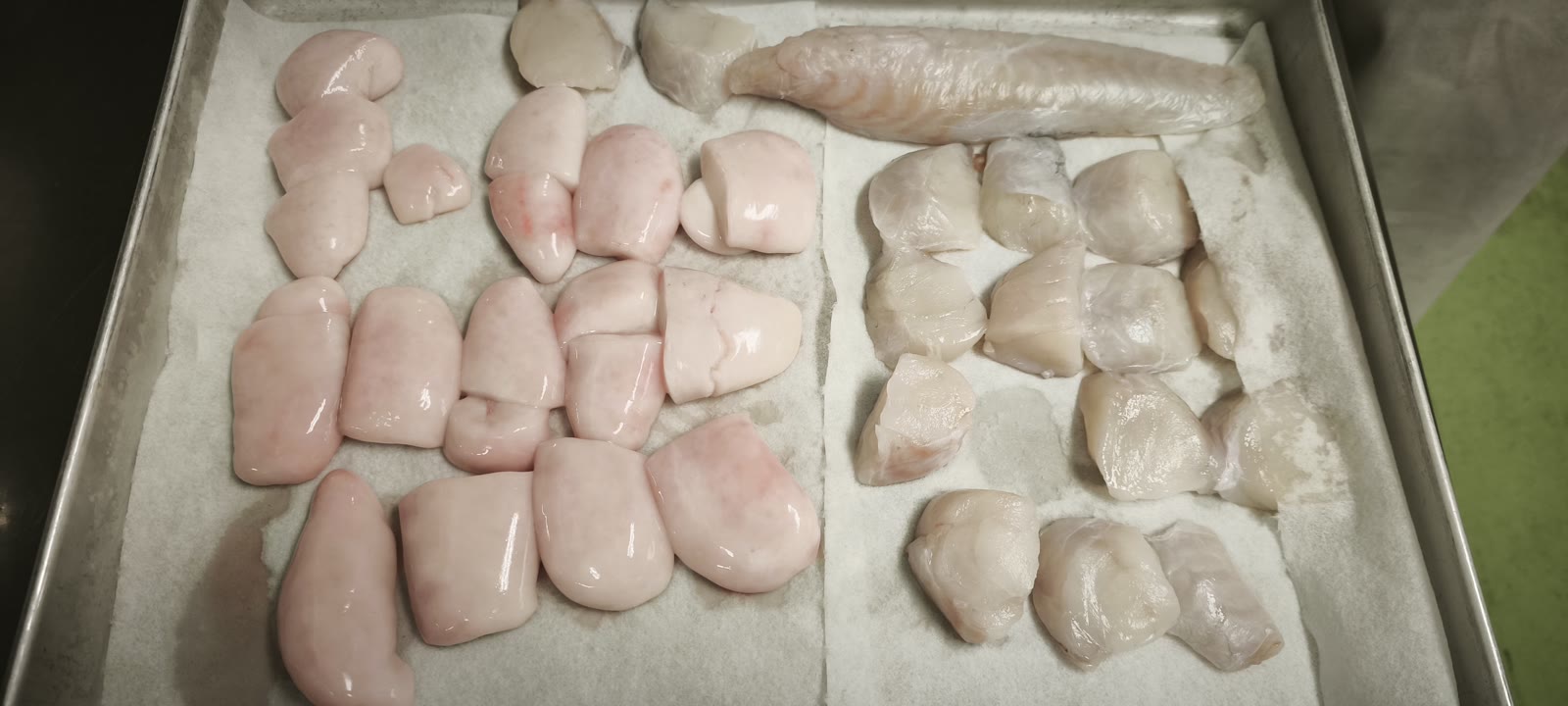
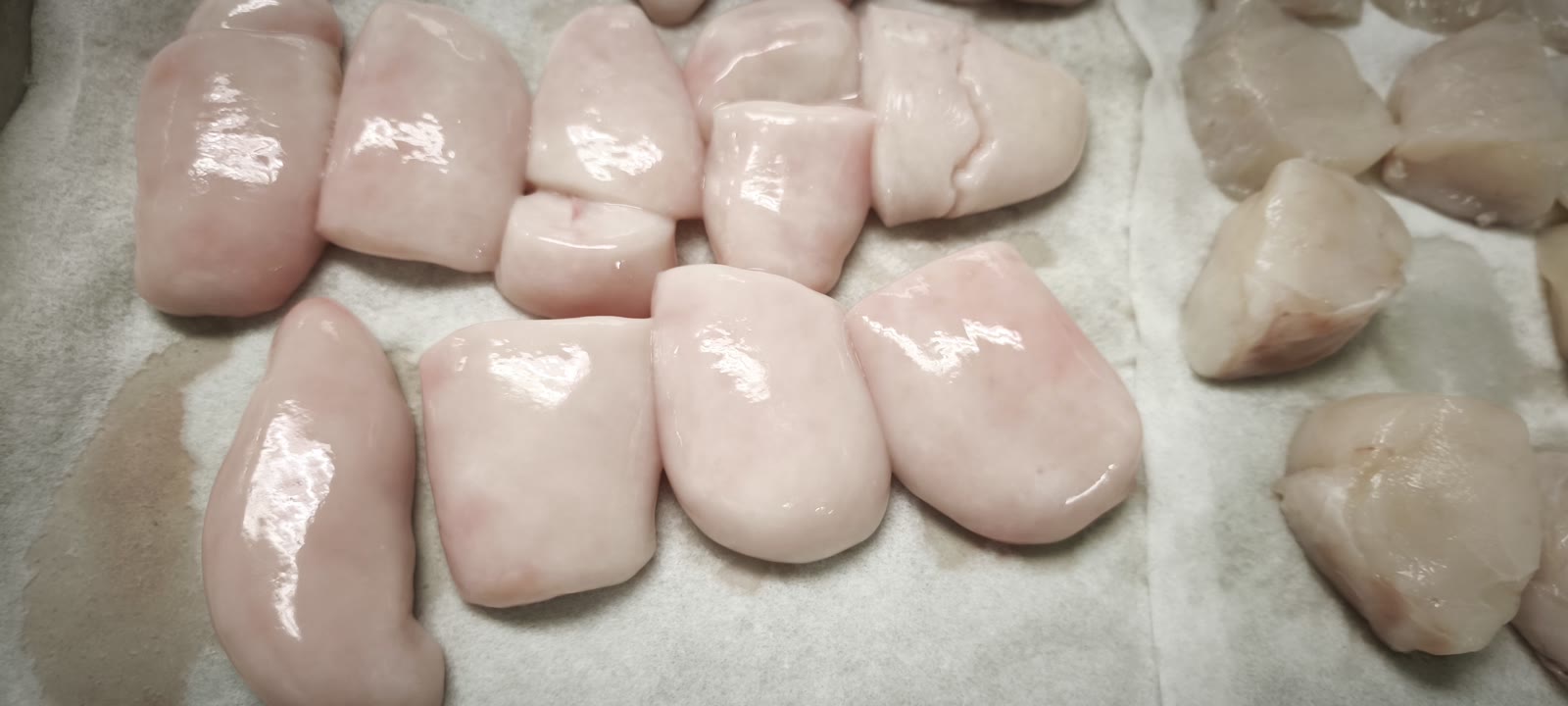
Shirako, the testes of the male fish, is a prized winter treat in Japanese cuisine. Whether fugu shirako is edible depends on the species: for four approved species it is not allowed, and for one species it is only allowed under conditions about where it was caught and how it was processed. Some fugu are hermaphrodites, and their reproductive organs are always treated as toxic. A trained chef knows these rules. This is one more reason the person behind the counter matters.
How fugu licenses work in Japan
This is where English-language information often gets confusing, so let me clear it up.
It is a prefectural license, not a national one
There is no single national “fugu license.” Japan’s national rules say that businesses handling fugu must have it processed by someone approved by the prefecture (Japan’s equivalent of a state or province). Each prefecture decides how to approve people, and even what to call the license. In Tokyo, the official title is fugu toriatsukai sekininsha (fugu handling supervisor). Osaka, Kyoto, Kanagawa, and other prefectures each use different names. “Fugu license” is simply the common nickname.
Rules also differ in the details. For example, Tokyo’s license has no expiry date, while some prefectures require renewal every five years.
Since 2019, there has been one national standard for the exam
In the past, prefectures approved fugu handlers in different ways; some used training courses instead of exams. In 2019, the Ministry issued a national standard: knowledge and skills must be confirmed by an exam, and prefectures should in principle accept each other’s qualifications. Since then, prefectures have been bringing their exams into line with it.
What the exam actually tests
Taking Tokyo as an example, the exam has two parts:
- A written test (35 questions in 90 minutes) on Tokyo’s fugu regulations, general fugu knowledge (edible species and parts, the toxin, how to identify species), and seafood hygiene.
- A practical test. Candidates must name five real fugu species in three minutes. Then, within 18 minutes in total, they must identify each organ, sort it into “edible” or “not edible,” remove the toxic parts, and prepare the fish for hot pot. If you do not finish every step in time, you fail, no matter how well you did otherwise.
In the 2026 exam year, 265 people took the Tokyo exam and 140 passed, a pass rate of 52.8%. In other words, nearly half of candidates did not pass.
When I took the exam in 2006, I practiced for about four months beforehand, during breaks and after work at the restaurant where I worked, always with my seniors or my master watching. Together with a paid training course, I broke down about 50 fish. That supervision is not optional: in Tokyo, someone without a license may only handle fugu under a licensed supervisor who is present and giving instructions.
A license from another prefecture is not automatically valid in Tokyo
Tokyo requires a Tokyo license to handle fugu in Tokyo. Holders of a license from an eligible prefecture must attend Tokyo’s acceptance course and then apply for the Tokyo license. Other prefectures have their own procedures.
How to choose a safe fugu restaurant
Here is what I would tell a friend visiting Japan.
1. Eat fugu only at a restaurant, and only from a licensed chef
In Tokyo, any facility that breaks down whole fugu must have its own dedicated licensed fugu handler and be certified by the Tokyo governor. Restaurants may also buy fugu whose toxic parts have already been removed by a licensed handler (migaki); serving that does not require a license. Either way, the toxic parts are removed by licensed hands. Specialist fugu restaurants and serious Japanese restaurants that offer fugu are the natural places to go.
It is not rude to ask whether the chef is licensed. A proper restaurant will be happy to answer. Some restaurants serve only fugu that was processed by a licensed supplier; that is legal too. You can simply say: 「ふぐの免許はお持ちですか?」(Fugu no menkyo wa omochi desu ka? — “Do you have a fugu license?”)
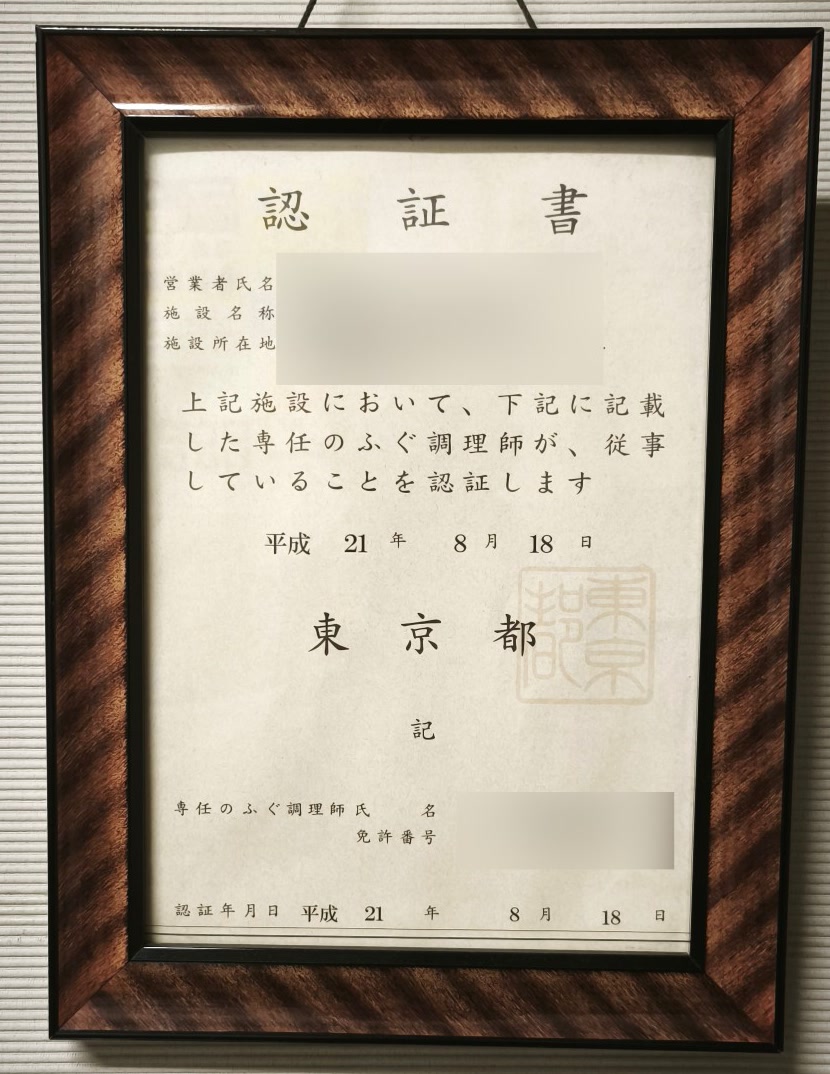
Many restaurants also display their certificate where guests can see it. In Tokyo, a facility certified to handle whole fugu must post it in a place that is easy to see. Here is what a Tokyo certificate looks like:
2. Walk away from anyone offering liver
As explained above, fugu liver is illegal to serve in Japan. A place that offers it is breaking the law, and you should not trust the rest of its fugu either.
3. Never eat fugu caught or prepared by an amateur
This is the most important rule in this article. The Ministry’s words are blunt: never prepare fugu that you caught yourself or that an acquaintance gave you. Telling species apart is very hard for non-professionals, and the edible parts change from species to species.
The official numbers show where the risk really is. Japan’s reported fugu poisoning cases:
| Year | Incidents | People affected | Deaths |
|---|---|---|---|
| 2021 | 13 | 19 | 0 |
| 2022 | 10 | 11 | 1 |
| 2023 | 9 | 10 | 0 |
| 2024 | 10 | 10 | 0 |
| 2025 | 10 | 15 | 0 |
Source: MHLW, updated April 2026.
In 2025, nine of those ten incidents happened at home, not in restaurants. So if a fishing guide, a host, or a new friend offers to cook a fugu they caught, please say no, however kind the offer.
4. Understand what happens behind the counter
Licensed handlers must keep the toxic parts they remove in a locked container and dispose of them safely, for example by incineration. At my restaurant, the fish dealer we work with takes them back. As far as I know, many restaurants buy fugu as migaki, fish that has already had its toxic parts removed, so breaking down whole fish in the restaurant is less common than people imagine. Either way, the fugu reaching your table has passed through trained, licensed hands. (This paragraph reflects my own experience, not a legal standard.)
What to expect on a fugu course
A typical fugu course comes in this order:
- Sakizuke — a small starter.
- Tessa — thin-sliced fugu sashimi.
- Kawa — fugu skin.
- Karaage — deep-fried fugu.
- Tecchiri — fugu hot pot.
- Zosui — rice porridge, to finish the hot pot.
- Mizumono — fruit or a sweet to end the meal.
Hirezake (fin sake) is ordered separately, not as part of the course. The exact dishes and order differ from restaurant to restaurant.
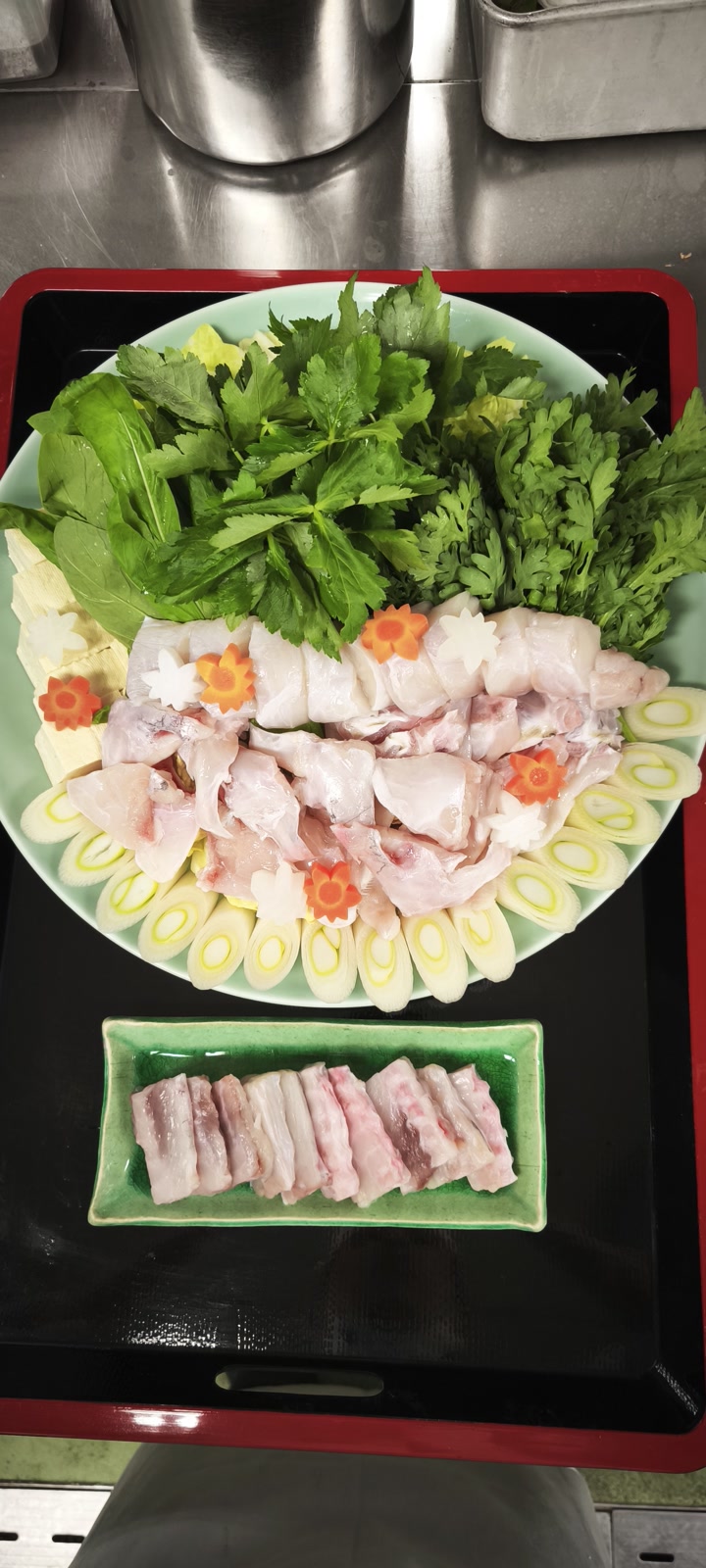
When the chef prepares the fish for hot pot, it is the same task tested in the license exam: removing the toxic parts and preparing the edible pieces. If you have a seat at the counter, you are watching a skill that takes real training.
Price and season
- Price: A fugu dinner course in Tokyo usually costs between 10,000 and 30,000 yen. At an affordable restaurant, expect around 10,000 yen; a high-end restaurant can charge 30,000 yen or more.
- Best season: Fugu is in season in winter, roughly November to February. Some restaurants, for example those using farmed fugu, serve it all year.
- Booking: I recommend booking ahead, especially in winter. If you do not speak Japanese, ask your hotel staff or use a booking site.
FAQ
Is fugu safe to eat in Japan? At a licensed restaurant, fugu has an excellent safety record. Most poisoning cases in recent years happened at home, with fish prepared by non-professionals. Never eat fugu prepared by an unlicensed person.
Does cooking make fugu poison safe? No. Japan’s Ministry of Health states that salting, soaking in water, and heating do not make fugu toxin harmless.
Can I eat fugu liver if I ask for it? No. Serving fugu liver is banned by law in Japan, for every species, wild or farmed. A restaurant that offers it is breaking the law.
Is a fugu license the same across Japan? No. It is issued by each prefecture, and the name and procedures differ. Since 2019, the exam content has followed one national standard, but a license from another prefecture does not automatically allow someone to handle fugu in Tokyo.
Is the shirako (milt) safe? It depends on the species. Some approved species have edible testes and some do not. Eat it only at a licensed restaurant, where the chef knows the rules.
Safety disclaimer
This article is general information written by a working chef, based on official Japanese government information as of September 2026. It is not medical or legal advice, and no one can promise that any food is 100% risk-free. Rules on edible species and parts can change; the official source is the Ministry of Health, Labour and Welfare. If you feel numbness in your lips, tongue, or fingers after eating fugu, call an ambulance right away (dial 119 in Japan).
Ready to try fugu in Japan?
Fugu is one of the great experiences of Japanese cuisine, and you do not need to be brave to enjoy it. You only need to choose the right place: a licensed chef, no liver on the menu, and never a home-cooked fish.
More from my kitchen
- Kaiseki Explained by an Itamae: The Course Order and the Words on the Menu
- Sitting at a Japanese Counter: What Makes an Itamae Happy (and What Doesn’t)
- Japanese Knife Types and Names, Explained by a Working Itamae
- How to Sharpen a Single-Bevel Japanese Knife, Step by Step
- How to Cut a Tuna Block into Saku (Sashimi Blocks): A Professional Itamae’s Method