By Chef Paprika
This article contains affiliate links. If you buy through them, itamae.fun may earn a small commission at no extra cost to you.
Walk into a knife shop, or open any online store, and you will see whetstones with numbers on them: #220, #1000, #3000, #6000. Which one do you actually need? And do you need more than one?
I am Chef Paprika, an itamae (a chef of Japanese cuisine) with 23 years in professional kitchens. Whetstones are part of my work every week. In this guide I explain what the numbers mean, which stone to buy first, and when it is worth adding more. Where I give my own opinion, I say so.
The short answer
- If you buy only one stone, buy a medium stone, around #1000. It puts an everyday working edge on a knife, and it is the stone you will use most.
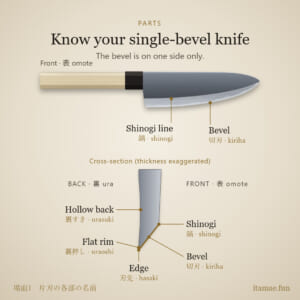
- Add a finishing stone (#3000 and up) when you start sharpening regularly, or if your knife is single-bevel (yanagiba, deba, usuba): the back of a single-bevel knife is finished on it.
- A coarse stone (about #80–#400) is for chips and reshaping. Most home cooks do not need one at first.
- Once you sharpen once or twice a month or more, get a flattening stone to keep your stones flat.
- A combination stone, #1000 on one side and #6000 on the other, is a good way to get a medium and a finishing stone in one. This is my recommendation for many home cooks.
Not sure? My free knife app asks you four questions and suggests which stones to buy: Find your stones in 4 questions (tap the button in the whetstone section).
What the grit number means
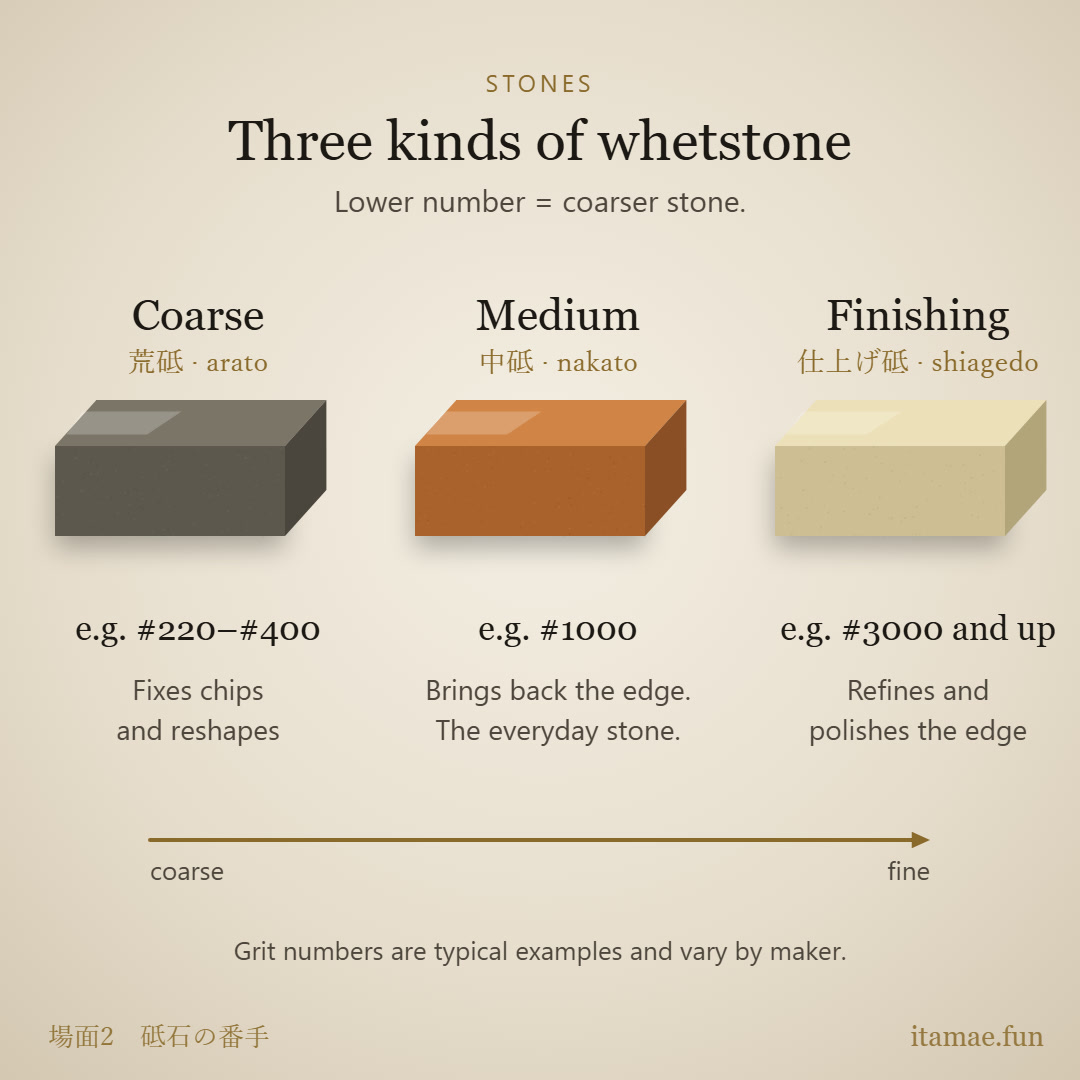
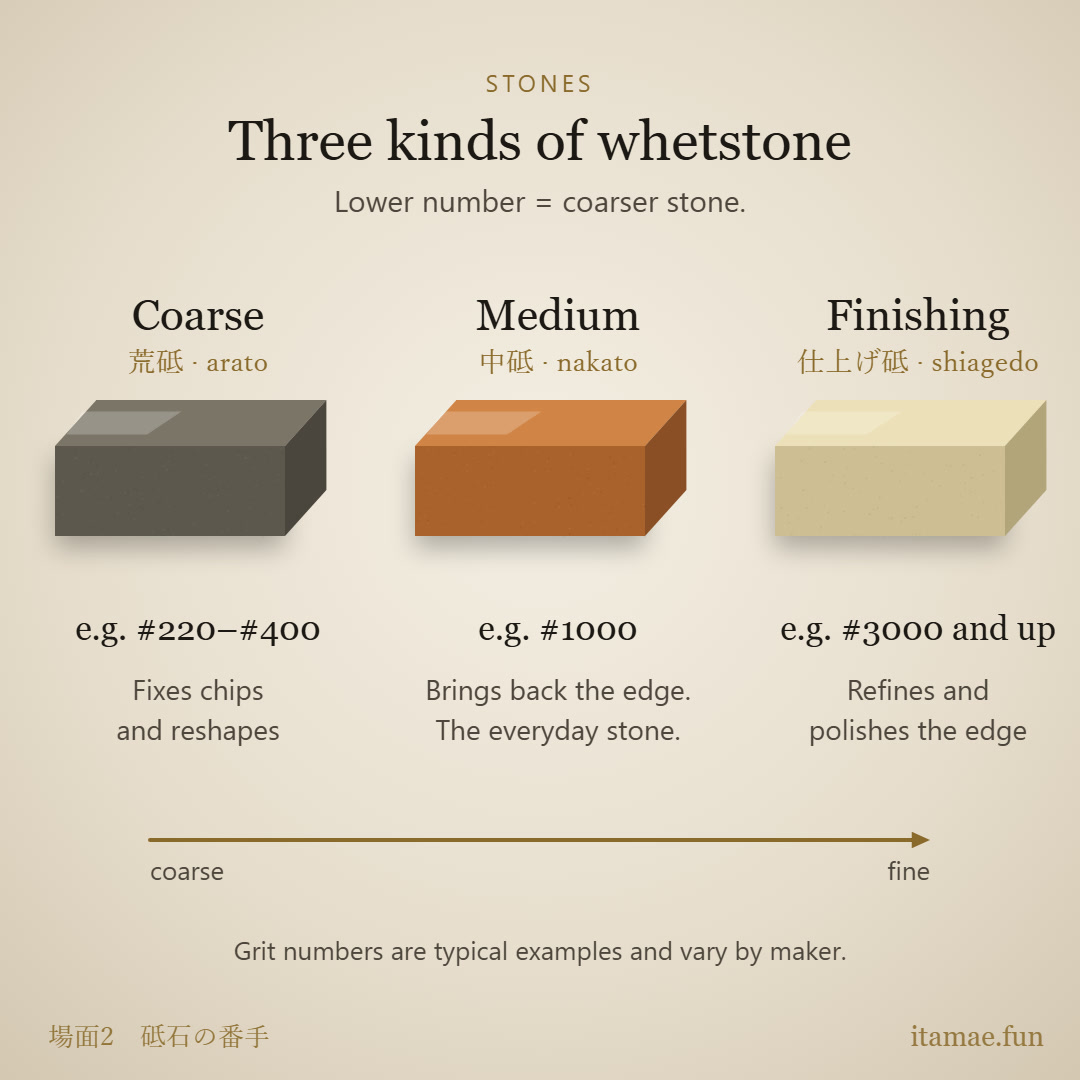
The number on a whetstone is its grit. The lower the number, the coarser the stone and the more steel it removes. The higher the number, the finer the stone and the smoother the edge it leaves.
| Stone | Japanese | Typical grit (example) | What it does |
|---|---|---|---|
| Coarse | 荒砥 (arato) | about #80–#400 | Fixes chips and an uneven shape. It removes a lot of steel, so do not overdo it. |
| Medium | 中砥 (nakato) | about #1000–#2000 | Puts on an everyday working edge. The stone you use most. |
| Finishing | 仕上げ砥 (shiagedo) | about #3000 and up | Refines and polishes the edge. Also used for the back of a single-bevel knife. |
| Flattening | 面直し砥石 (mennaoshi-to) | — | Not for knives. It brings the worn face of your other stones back to flat. |
These ranges are typical examples. Grit numbers vary from maker to maker, so a #1000 from one brand is not exactly the same as a #1000 from another.
#1000, #3000 or #6000?
These three numbers are the ones people ask me about most.
#1000: the everyday stone
A #1000 is a medium stone. If your knife has gone dull, this is where you start. For many home kitchens, one medium stone is enough to start.
A simple test for “dull”: if the knife slides on the skin of a tomato instead of biting into it, it is time for the medium stone.
A medium #1000 stone to start with
#3000: the start of finishing
A #3000 is where finishing stones begin. It smooths out the scratches the medium stone leaves and gives a cleaner, finer edge. If you sharpen regularly, or you own a single-bevel knife, a #3000 is a sensible second stone.
#6000: a finer finish
A #6000 is a finer finishing stone. You will often find it as the second side of a combination stone, paired with a #1000. For a home cook, that combination covers both the everyday edge and the finish.
A #1000/#6000 combination stone
Which stones should you buy? A simple guide
This is the same logic my knife app uses. Start from what you sharpen and how often.
| Your situation | What to get |
|---|---|
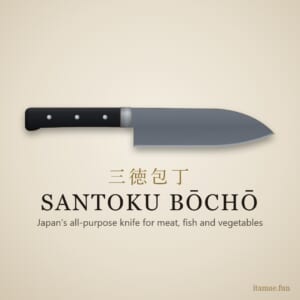
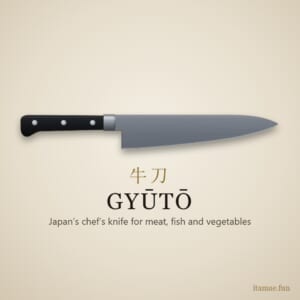
| Double-bevel knife (santoku, gyuto, petty), sharpening for the first time | A medium stone (#1000) only |
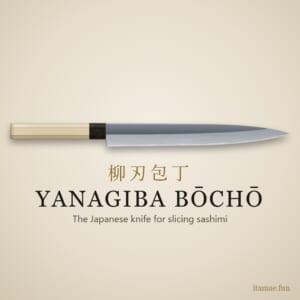
| Single-bevel knife (yanagiba, deba, usuba), first time | Medium + finishing stone (or a #1000/#6000 combination) |
| You sharpen once or twice a month | Medium + finishing stone + flattening stone |
| You sharpen daily or weekly (for work) | Coarse + medium + finishing + flattening |
| Your knife has visible chips | Add a coarse stone (see the note below) |
Buy the medium stone first in every case. Then add the others as you need them.
If you already own a medium stone, you do not need another one. Add only what is missing.
A note on chips
A coarse stone fixes chips, but it removes steel fast. If your knife has a big chip and you have never sharpened before, it is fine to use a sharpening service at first, such as the one at a knife shop. Too much work on a coarse stone can change the shape of the knife. (My view.)
A coarse/medium combination stone (#220/#1000)
Combination stones: two stones in one
Many whetstones have two sides with different grits. A #1000/#6000 stone gives you a medium side for the everyday edge and a fine side for finishing. A #220/#1000 stone pairs a coarse side with a medium side.
For many home cooks, I recommend a #1000/#6000 combination stone. It takes up less space, costs less than two separate stones, and covers both the everyday edge and the finish. (My view.)
Does the steel change which grit you need?
Japanese knives come in carbon steels, such as White (shirogami) and Blue (aogami), and in stainless steels, such as VG-10 and Ginsan. You may read advice that each steel needs its own grits.
In my view, you do not need to change your stones for the steel. The same medium stone and finishing stone work for a carbon-steel knife and a stainless one. What matters more is drying the knife well after use, because carbon steel rusts.
For the steels themselves, see Japanese Knife Types and Names.
Soak or splash?
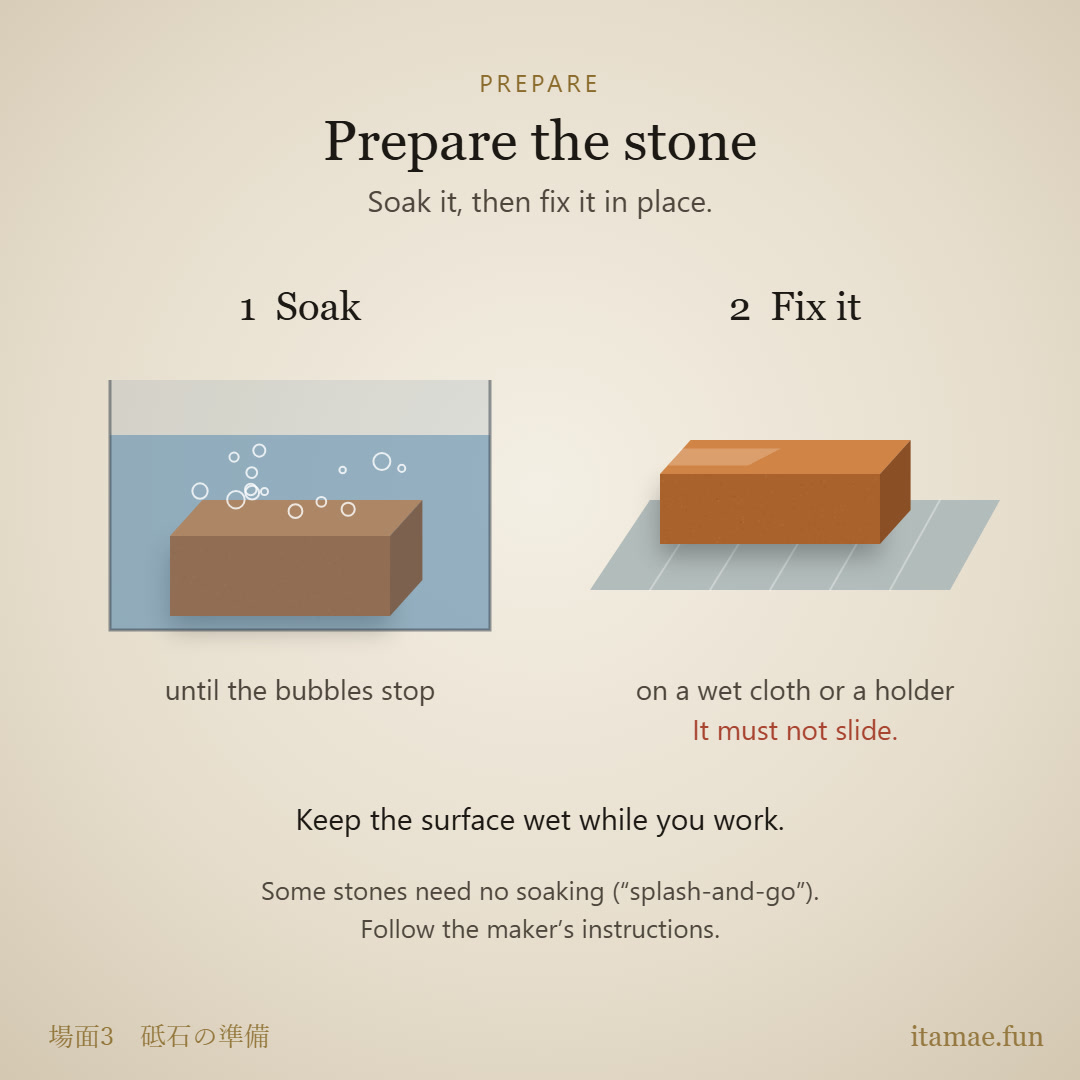
Some stones are soaked in water before use: leave them in until the bubbles stop rising. Others, often called splash-and-go, are used with just a splash of water on top. Always follow the instructions that come with your stone.
Whichever kind you have, fix it so it cannot slide: on a wet cloth or in a stone holder.
Keep your stones flat
Every stone wears into a shallow dip with use. A dipped stone puts a curved, uneven edge on your knife. If you sharpen once or twice a month or more, get a flattening stone and rub your stones flat from time to time. After flattening, round off the sharp corners a little.
To store a stone, rinse off the sludge, let it dry naturally, and keep it out of direct sunlight.
FAQ
What grit whetstone should a beginner buy? A medium stone, around #1000. If you want a finishing stone as well, a #1000/#6000 combination stone is a good choice.
Do I need three stones? No. Many home cooks need only a medium stone. Add a finishing stone if you sharpen regularly or own a single-bevel knife, and a coarse stone for chips, or if you sharpen for work.
Is #6000 too fine for a beginner? Not as the second side of a combination stone. Use the #1000 side first, then a few strokes on the #6000 side to finish.
Do I need a different stone for a single-bevel knife? The same stones work. But a single-bevel knife needs a finishing stone for the back: you sharpen the front a lot, and the back only a little. See How to Sharpen a Single-Bevel Japanese Knife.
How often should I flatten my stone? Whenever you see or feel a dip in the middle. If you sharpen once or twice a month or more, keep a flattening stone at hand.
Are grit numbers the same everywhere? No. They are a guide, and they vary from maker to maker.
Start with one good stone
You do not need a wall of stones to keep a Japanese knife sharp. Start with a medium #1000. Add a finishing stone, or choose a #1000/#6000 combination from the start, when you sharpen more often. Keep your stones flat. And when you are not sure, let the app pick for you.
Browse whetstones that ship from Japan
More from my kitchen:
- How to Sharpen a Single-Bevel Japanese Knife, Step by Step: the full routine, in 8 diagrams.
- Single Bevel vs Double Bevel Knives: What’s the Difference?
- Gyuto vs Santoku (vs Nakiri and Bunka): Which Japanese Knife Should You Choose?
- Japanese Knife Types and Names, Explained by a Working Itamae
- How to Buy a Japanese Knife in Japan: A Working Itamae’s Guide for Travelers